
Blog
Social Media Marketing in Delhi: Strategies That Help Businesses Grow
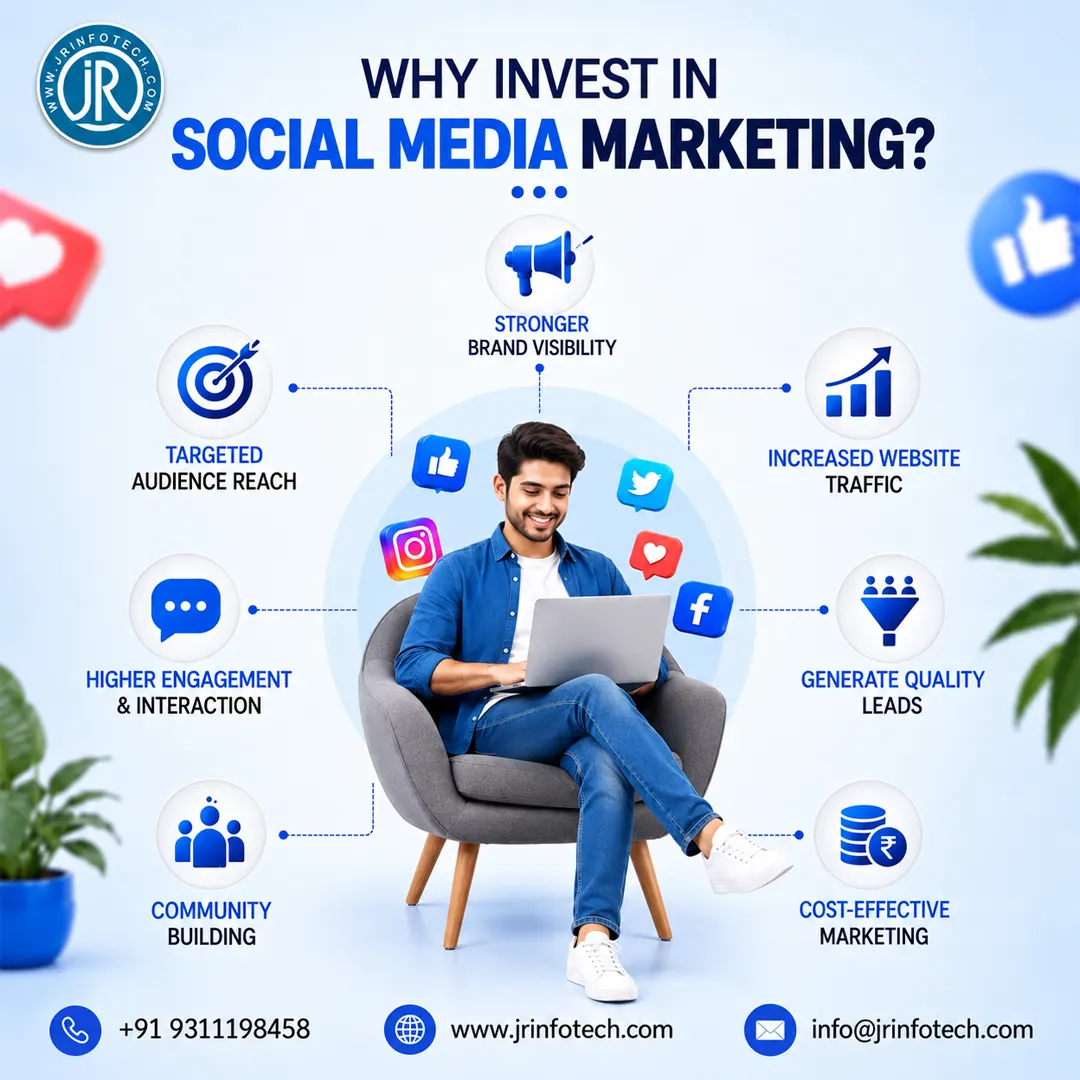
A social media page can have regular posts and still fail to bring meaningful business value. The difference usually comes down to strategy: knowing who you want to reach, what they need to see, which platforms suit your business, and how social activity connects with wider marketing goals.
Social Media Marketing combines content, audience engagement, paid promotion and performance analysis to help businesses communicate with potential customers online. For companies in Delhi and Delhi NCR, it can be particularly useful for building local awareness, generating enquiries and keeping a brand visible between purchase decisions.
For startups, SMEs, educational institutions and healthcare organizations, the right approach is not simply to post more often. It is to create useful content, maintain a consistent brand identity, understand audience behaviour and measure actions that matter to the business.
What Is Social Media Marketing?
Social media marketing is the process of using social platforms to promote a brand, product, service or organization through organic content, community engagement and, where appropriate, paid advertising.
A practical social media strategy normally includes:
- Defining business and marketing objectives
- Identifying the target audience
- Selecting relevant platforms
- Creating useful and engaging content
- Publishing consistently
- Managing comments and messages
- Running paid campaigns when suitable
- Reviewing analytics and improving future campaigns
The objective is not necessarily to collect the largest number of followers. A smaller but relevant audience can be more valuable when it engages with the brand, visits the website, sends an enquiry or becomes a customer.
Why Does Social Media Marketing Matter for Delhi Businesses?
Delhi has a highly competitive business environment, with organizations serving both neighbourhood audiences and customers across the wider NCR. A business may therefore need to communicate at several levels: local, city-wide and sometimes national.
Social media provides a direct communication channel where businesses can demonstrate their expertise, showcase products or services, answer common questions and build familiarity before a customer makes contact.
For example, a healthcare organization may use educational posts to explain common procedures, while an educational institution may highlight courses, campus activities and student-focused information. A local service business may focus more heavily on customer questions, location-specific content, offers and enquiry generation.
The strategy should follow the business model rather than forcing every organization into the same content format.
Which Social Media Platforms Should a Business Use?
There is no universal platform mix. The right choice depends on the audience, industry, content format and business objective.
Instagram can be useful for visually driven businesses and brands that can communicate effectively through images, carousels, Stories and short-form video.
Healthcare, lifestyle, education, hospitality, retail and many consumer-focused businesses may find visual content particularly useful.
Facebook can support brand communication, community interaction and paid advertising. It can also remain relevant for businesses targeting local consumers and established customer groups.
LinkedIn is often more appropriate for B2B organizations, professional services, technology companies, recruitment-related businesses and organizations looking to build professional authority.
YouTube and Short-Form Video
Video can explain complex products and services more effectively than a static post. Tutorials, demonstrations, FAQs, interviews and educational videos can all become part of a broader content strategy.
The important point is to avoid creating accounts everywhere simply because the platforms exist. Concentrating resources on channels where the target audience is actually active is often more practical.
What Are the Main Components of Social Media Marketing?
1. Social Media Strategy
A strategy defines what the business wants social media to accomplish. Possible objectives include brand awareness, website traffic, enquiries, community building or customer retention.
Each objective requires different content and measurement.
2. Content Creation
Good content should give the audience a reason to stop, read, watch, save, share or respond.
Depending on the business, content can include:
- Educational posts
- Product or service explainers
- Reels and short videos
- FAQs
- Customer-focused information
- Industry insights
- Behind-the-scenes content
- Company updates
- Offers and campaigns
The strongest content calendars usually balance promotional content with information that genuinely helps the audience.
Community Management
Social media is not only a publishing channel. Comments, direct messages and customer questions can reveal what an audience actually wants to know.
Timely responses also help maintain a professional brand presence
Paid Social Advertising
Organic content and paid campaigns serve different purposes. Paid social can help businesses reach selected audience groups and test specific offers, messages or creative formats.
For example, a Delhi-based business may create separate campaigns for different services or audience segments rather than sending everyone to the same generic advertisement.
Analytics and Optimization
A campaign should be reviewed using meaningful metrics rather than vanity numbers alone.
Depending on the objective, useful indicators can include:
- Reach
- Engagement
- Video views
- Website visits
- Enquiries
- Leads
- Click-through rate
- Cost per result
- Conversions
The data should influence the next content and advertising decisions.
How Does Social Media Marketing Support SEO?
Social media and SEO are separate marketing disciplines, but they can support one another.
A useful social post may send people to a website article, service page or landing page. Content can also be repurposed across channels. Google now provides Search Console platform properties that allow eligible creators and site owners to examine how content from platforms such as Instagram, X and YouTube is discovered through Google Search.
This makes it useful to think beyond individual platforms. A strong piece of content can potentially contribute to a wider digital ecosystem involving social profiles, websites, search visibility and customer journeys.
At the same time, businesses should not assume that social activity automatically guarantees higher Google rankings. SEO requires its own technical and content practices, and Google recommends creating helpful, reliable, people-first content rather than content designed primarily to manipulate search rankings.
Social Media Marketing for Different Types of Businesses
Startups
Startups often need to establish credibility while working with limited marketing resources. Educational content, founder-led communication, product demonstrations and customer-focused explanations can help create an identifiable brand voice.
Small and Medium Businesses
SMEs can use social media to remain visible to existing customers while attracting new audiences. Local content, FAQs, service information and targeted advertising can be combined according to the business objective.
Educational Institutions
Schools, colleges, training institutes and education businesses can use social platforms to communicate courses, events, facilities, educational information and student-related updates.
Healthcare Organizations
Healthcare content requires particular care. Information should be accurate, responsible and easy to understand. Rather than relying on sensational claims, organizations can focus on educational topics, service explanations, frequently asked questions and clear pathways for enquiries.
What Should a Delhi Business Look for in a Social Media Marketing Agency?
Choosing an agency should involve more than comparing the number of posts included in a package.
Consider whether the provider can explain:
- How the target audience will be identified
- Which platforms are appropriate and why
- What type of content will be created
- How paid campaigns will be managed
- Which metrics will be reported
- How the strategy will change based on performance
- How social activity connects with the website and wider digital marketing plan
A useful agency relationship should also make responsibilities clear. The business should know who approves content, how feedback is handled, what information is needed from the client and how campaign performance will be reviewed.
Why Choose JR INFOTECH for Social Media Marketing in Delhi?
JR INFOTECH has operated since 2005 and provides digital services including SEO, social media marketing, social media optimization, content marketing, website development and other digital solutions. Its service information specifically lists social media audit, audience growth, social media analysis, page monitoring, page creation, campaign reporting and optimization among its SMM capabilities.
This broader service capability can be useful when social media is part of a larger digital strategy rather than an isolated activity. A social campaign may need a landing page, SEO support, content development, branding or website improvements to support the customer journey.
JR INFOTECH’s current website also identifies startups, small businesses,
educational institutions, healthcare organizations, manufacturers and enterprises among the types of organizations it serves.
For a Delhi business, the practical objective should be to develop a social media system that matches its audience, resources and business goals—not simply to publish a predetermined number of posts.
Common Social Media Marketing Mistakes
Posting Without a Strategy
A busy content calendar does not automatically mean an effective marketing strategy. Every major content theme should have a reason for existing.
Focusing Only on Followers
Follower growth can be useful, but it should not be the only measurement. Website visits, enquiries, engagement quality and conversions may provide more meaningful business insight.
Using the Same Content Everywhere
A LinkedIn audience may respond differently from an Instagram audience. Content can be repurposed, but the presentation should suit the platform.
Ignoring Comments and Messages
A customer who takes the time to ask a question is already showing interest. Slow or unclear responses can weaken the customer experience.
Expecting Immediate Results
Social media usually requires testing and refinement. Creative formats, messaging, audiences and campaign objectives may need to be adjusted as performance data becomes available.
A Practical Social Media Marketing Process
A straightforward process can look like this:
Step 1: Define the goal
Decide whether the priority is awareness, engagement, traffic, enquiries or another measurable outcome.
Step 2: Understand the audience
Identify customer needs, questions, preferences and buying considerations.
Step 3: Select platforms
Choose the channels that fit the audience and content resources.
Step 4: Build content themes
Create recurring topics that educate, inform, demonstrate expertise and support business objectives.
Step 5: Publish and engage
Maintain consistency while responding to relevant audience interactions.
Step 6: Test paid campaigns where appropriate
Use advertising when additional reach or targeted promotion is justified.
Step 7: Measure and improve
Review performance and use the findings to refine the next cycle.
FAQs
Q 1: What is social media marketing?
Social media marketing is the use of social platforms to promote a business, organization, product or service through content, audience engagement and paid advertising where appropriate.
Q 2: Is social media marketing useful for small businesses in Delhi?
Yes. Small businesses can use social media to build local awareness, communicate with customers, showcase services and generate enquiries. The strategy should focus on relevant audiences rather than simply maximizing follower numbers.
Q 3: Which social media platform is best for a business?
There is no single best platform for every business. Instagram, Facebook, LinkedIn, YouTube and other platforms serve different audiences and content formats. The right choice depends on the business model and target customers.
Q 4: How often should a business post on social media?
There is no universal posting frequency. A sustainable schedule with useful, relevant content is generally more practical than publishing frequently without a clear strategy.
Q 5: Can social media marketing help generate leads?
Yes. Social media can contribute to lead generation through organic content, direct enquiries, website traffic, landing pages and paid advertising. The exact approach depends on the business and its conversion process.
Q 6: What is the difference between organic and paid social media marketing?
Organic social media focuses on unpaid content, engagement and community building. Paid social uses advertising budgets to distribute campaigns to selected audiences and achieve specific objectives.
Q 7: Should a business use the same content on Instagram, Facebook and LinkedIn?
Content can be repurposed, but it should usually be adapted to the audience and format of each platform. A professional LinkedIn post may need a different presentation from an Instagram Reel.
Q 8: How do I measure social media marketing performance?
Measurement should reflect the campaign objective. Useful metrics can include engagement, reach, video views, website traffic, enquiries, leads, click-through rates and conversions.
Q 9: Does social media marketing improve Google rankings?
Social media should not be treated as a guaranteed direct ranking factor. However, social content can support broader visibility, discovery, website traffic and content distribution. Google also provides tools for analyzing how social and video content can appear in Search.
Q 10: How can a business choose a social media marketing agency in Delhi?
Look for an agency that understands your audience, explains its strategy clearly, provides meaningful reporting and can connect social media activity with your broader digital marketing objectives.
Conclusion
Effective social media marketing is less about posting constantly and more about creating a system that connects content with genuine business objectives. For Delhi and Delhi NCR businesses, that may mean building local awareness, educating potential customers, generating enquiries or strengthening an established brand.
The most practical strategy combines audience research, suitable platforms, useful content, consistent engagement, carefully planned paid campaigns and regular performance analysis.
For businesses that need social media alongside SEO, website development, content marketing or branding, an integrated digital approach can make the overall customer journey easier to manage.