
Blog
Best Website Design Delhi: How to Choose the Right Web Partner
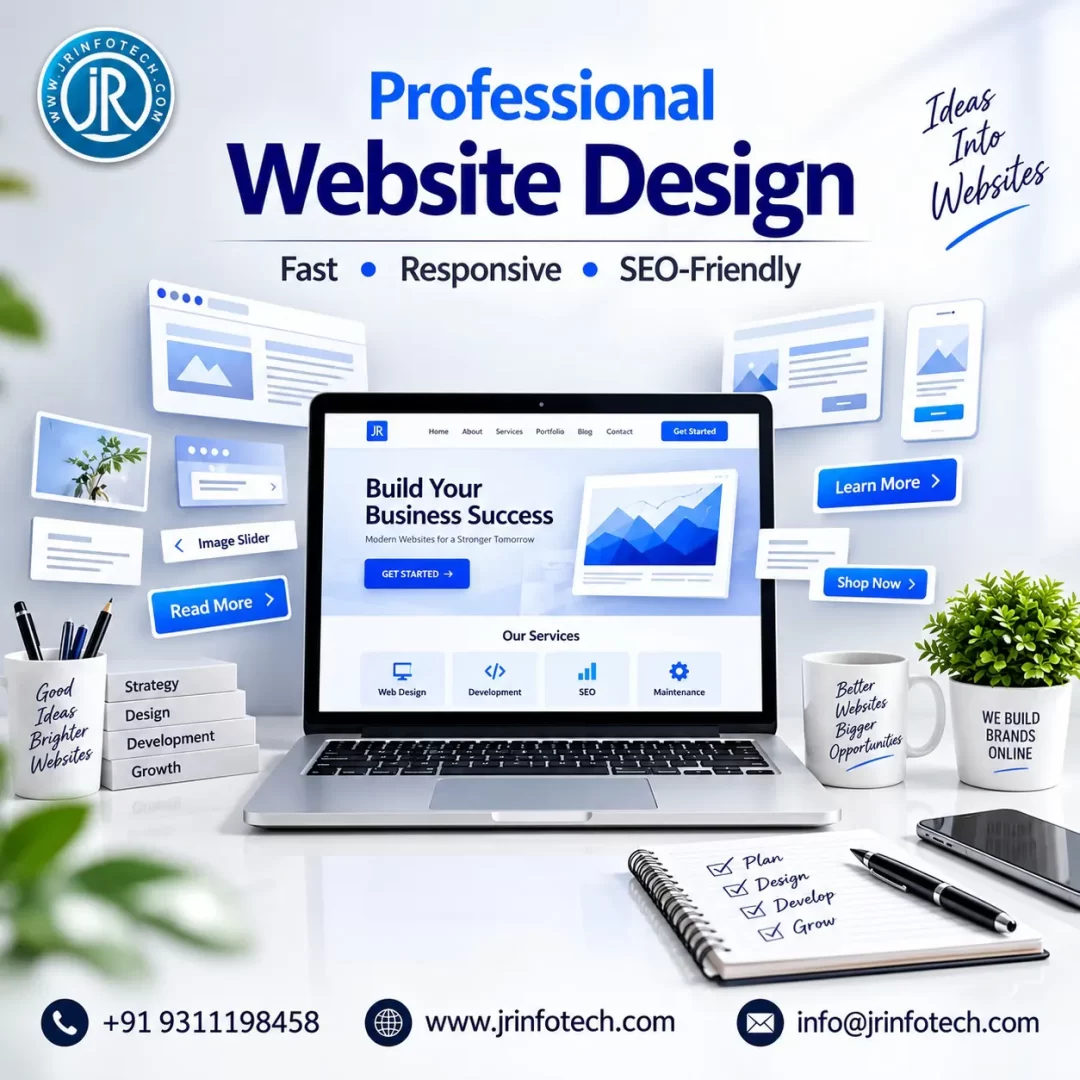
Finding the best website design Delhi service is not simply about choosing the company with the most attractive portfolio. A business website has to do several jobs at once: explain what the company offers, build credibility, make information easy to find, work smoothly on mobile devices and give visitors a clear path to contact or purchase.
For a startup, a website may be the first serious introduction to the brand. For an established business, an outdated website can make otherwise strong services difficult to discover or understand. Educational institutions and healthcare organizations have additional requirements around information architecture, accessibility, trust and easy navigation.
This guide explains what to look for when comparing website design services in Delhi and Delhi NCR, including design quality, technical foundations, SEO readiness, mobile experience, scalability and post-launch support.
What Does Good Website Design Actually Mean?
Good website design combines visual presentation with usability and technical performance. A website should look appropriate for its industry, but appearance alone is not enough.
A professional website should help users quickly answer basic questions: What does this business do? Who is it for? What services or products are available? Why should a visitor trust the business? What should they do next?
The design should support these answers through clear navigation, readable content, logical page structure, useful calls to action and consistent branding.
Google’s own guidance emphasizes useful, people-first content and well-organized pages rather than content created primarily to manipulate search rankings.
What Should You Look for in the Best Website Design Delhi Services?
There is no single design that is right for every business. The right website depends on the company’s goals, audience, industry and functionality requirements.
1. Responsive and Mobile-Friendly Design
A website should provide a usable experience across desktops, tablets and smartphones. This means more than simply shrinking the desktop version.
Menus, buttons, forms, images, typography and content sections should adapt properly to different screen sizes.
Google uses the mobile version of a site’s content for indexing and ranking under mobile-first indexing, making mobile-friendly implementation an important consideration when planning a website.
For a Delhi business receiving enquiries through mobile searches, a visitor who struggles to navigate the site may simply leave before contacting the company.
2. Clear UI/UX
UI refers to the visual interface, while UX focuses on how easily people can use the website.
A strong website should make common actions obvious. Visitors should not have to search through several pages to find a phone number, enquiry form, service description or product category.
For example, a healthcare website may need clearly separated information for treatments, doctors, appointments and contact details. An ecommerce website needs a different structure, with product categories, search, product information, cart functionality and checkout.
The design should therefore follow the user’s journey rather than forcing every business into the same template.
3. SEO-Friendly Website Structure
Website design and SEO should not be treated as completely separate activities.
Important foundations include logical URLs, crawlable navigation, descriptive headings, useful page content, appropriate title and meta information, image optimization and a structure that allows search engines to understand the site.
Google’s Search Essentials recommends creating helpful content, using descriptive terminology in prominent locations and ensuring links are crawlable.
A beautifully designed website with poor structure can still struggle to communicate its relevance to search engines.
4. Website Speed and Core Web Vitals
Performance affects how people experience a website. Heavy images, unnecessary scripts, poor hosting configuration and inefficient code can all contribute to slow pages.
Google’s Core Web Vitals focus on loading performance, responsiveness and visual stability. Current recommended thresholds include LCP within 2.5 seconds, INP below 200 milliseconds and CLS below 0.1 for a good user experience.
These metrics should be treated as practical performance indicators rather than a promise of search rankings. Google also notes that good page-experience results alone do not guarantee top rankings.
5. Design That Matches the Brand
A professional website should look like an extension of the business rather than a disconnected online template.
Brand colors, typography, imagery, graphics, icons and layouts should work together consistently. For companies that already have a logo and established identity, the website should support that visual language.
This is especially useful for businesses competing in crowded local markets. A clear visual identity can make the company easier to recognize across its website, social media, advertisements and printed materials.
Which Type of Website Does Your Business Need?
Choosing the right development approach is just as important as choosing the visual style.
Static Business Website
A static website can work well when a company needs a relatively simple online presence with pages such as Home, About, Services and Contact.
It may be suitable for businesses that do not need frequent content updates or complex functionality.
CMS-Based Website
A CMS allows authorized users to manage website content without editing every page manually through code.
WordPress and other CMS platforms can be useful for businesses that regularly publish blogs, update services or manage multiple content sections.
Ecommerce Website
An ecommerce website requires considerably more planning than a basic business website. Product organization, categories, product pages, shopping carts, payment integration, order management and customer experience all need to work together.
Custom Website or Web Application
Businesses with specialized workflows may require custom development rather than a standard template. This can include portals, dashboards, ERP-related systems or other business-specific functionality.
The important question is not which technology sounds most advanced. It is which approach solves the actual business requirement without unnecessary complexity.
Why Local Website Design Services Can Be Useful in Delhi
Working with a Delhi-based website design team can make communication and business-context discussions more convenient for organizations operating in Delhi NCR.
A local team can also understand common requirements around local service areas, business enquiries, location pages, Hindi-English audiences and regional competition. However, location alone should not be the deciding factor.
A business should still evaluate the team’s portfolio, technical capabilities, communication process, maintenance approach and understanding of the company’s actual objectives.
Current Delhi search results show that many agencies emphasize responsive design, SEO, ecommerce, CMS development, speed and local service coverage. This makes it important for a business to compare the actual scope of service rather than relying only on phrases such as “best website design company.”
What Is the Website Design Process?
A practical website project usually begins with understanding the business rather than immediately designing the homepage.
Step 1: Requirement Understanding
The designer or development team should understand the company’s services, audience, competitors, goals and required features.
Step 2: Website Structure
The next stage is deciding the main pages, navigation and content hierarchy. This is where the website’s information architecture is established.
Step 3: UI/UX Design
Visual layouts are created around the brand and expected user journey. Important screens and sections are reviewed before development.
Step 4: Development
The approved design is converted into a working website using the appropriate CMS, programming technology or development framework.
Step 5: Content and SEO Implementation
Text, images, headings, metadata, internal links and other required content elements are added and organized.
Step 6: Testing
The website should be checked across devices and browsers. Forms, links, navigation, page speed, images and important functionality should also be tested.
Step 7: Launch and Maintenance
After deployment, the website should continue to be monitored and updated. Security updates, content changes, technical fixes and performance improvements may be required over time.
Common Website Design Mistakes Businesses Should Avoid
One common mistake is choosing design based entirely on appearance. A visually impressive homepage cannot compensate for confusing navigation or unclear content.
Another problem is trying to put too much information above the fold. The homepage should communicate the main value proposition without becoming overloaded with text, animations and banners.
Ignoring mobile users is another serious issue. The mobile version should be considered during design rather than treated as a final adjustment.
Businesses should also avoid expecting website design alone to automatically generate Google rankings. SEO involves content, technical accessibility, relevance, authority and many other factors. Google explicitly states that following SEO best practices does not guarantee that a page will rank first.
Finally, do not overlook maintenance. A website is not necessarily finished forever when it goes live. Business information, software, security, content and user requirements can change.
How JR INFOTECH Approaches Website Design
JR INFOTECH provides website development and digital solutions for startups, small businesses, educational institutions, healthcare organizations, manufacturers, enterprises and other businesses. The company has been operating since 2005.
Its web design and development services include custom CMS website development, PHP development, WordPress development, responsive web design, corporate websites, ecommerce websites, dynamic and static websites, landing pages, template-based websites and website redesign and maintenance.
This range allows businesses to discuss their requirements before selecting the appropriate type of website rather than automatically using one solution for every project.
JR INFOTECH also offers related digital services including SEO, social media marketing, Google promotion, content management, mobile app development, ERP development and graphics and brand identity services.
For a business planning a new website in Delhi, this broader service context can be useful when website development needs to connect with SEO, digital marketing, applications or branding.
How to Compare Website Design Companies in Delhi
Before making a decision, ask each provider practical questions.
Can they explain why they recommend a particular platform? Can the website be updated easily? How will mobile responsiveness be handled? What is included in development? Who provides the content? Is SEO structure included? How are revisions handled? What happens after launch?
Look beyond screenshots. Review whether the websites in a portfolio have clear navigation, sensible layouts, good mobile experiences and functionality relevant to the industries they serve.
Also make sure the project scope is clearly documented. This reduces confusion about pages, features, integrations, content responsibilities, timelines and future maintenance.